Drypoint engraving
The expressive power of a line drawn directly into metal
Drypoint – Technical Overview
Drypoint is a direct intaglio technique in which an image is scratched with a needle or burin into a metal plate (usually copper or zinc), creating grooves that hold ink. No acid or chemical etching is used, distinguishing it from techniques such as etching.
Main materials
- Copper or zinc plates.
- Steel, diamond or tungsten-carbide needles.
- Printmaking ink.
- Damp paper.
- Intaglio press.
Step-by-step process
Direct drawing
The artist draws directly on the metal plate with a sharp point, raising burrs (tiny ridges of metal) along the line.
Inking
Ink is applied across the plate so that it enters the lines.
Wiping
The surface is wiped with tarlatan, leaving ink in the grooves and burrs.
Printing
Damp paper is laid on the inked plate and passed through the press, transferring the image.
Visual characteristics
- Rich, deep, velvety lines produced by the metal burrs.
- Highly expressive, gestural marks.
- Editions are often small because the burrs wear down quickly.
Notable examples of drypoint
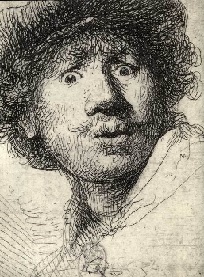
Rembrandt van Rijn
A master of chiaroscuro and free-flowing drypoint lines
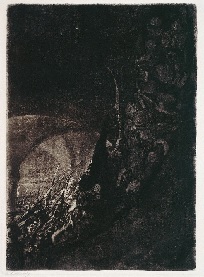
Käthe Kollwitz
Works with powerful social and emotional themes
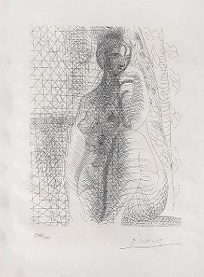
Pablo Picasso
Free exploration of form and spontaneous line