Etching
The printmaking technique that revolutionised artistic expression
Etching – Technical Overview
Etching is an intaglio printmaking technique in which acid bites into a metal plate, creating grooves that hold ink and allow the image to be printed.
Main materials
- Metal plate: traditionally copper, although zinc and steel are also used.
- Protective ground or acid-resistant wax.
- Etching needle (stylus).
- Etchant (usually nitric acid or ferric chloride).
- Printmaking ink and an intaglio press.
Step-by-step process
Preparing the plate
The metal plate is coated evenly with an acid-resistant ground (etching ground).
Drawing
Using a metal point, the artist scratches through the ground to expose the metal where the acid is intended to act.
Etching bath
The plate is immersed in an etching bath that bites into the exposed areas, forming grooves in the metal.
Cleaning
The ground is removed and the plate is thoroughly cleaned.
Inking
Ink is applied to the plate and the surface wiped, leaving ink only in the grooves.
Printing
The plate is placed in an intaglio press with damp paper. Pressure transfers the ink from the metal to the paper, revealing the etched image.
Visual characteristics
- Fine, expressive lines that can be controlled with great precision.
- Soft tonal effects are possible when combined with other techniques such as aquatint.
- Widely used by artists including Rembrandt, Goya and Piranesi.
Notable examples of etching
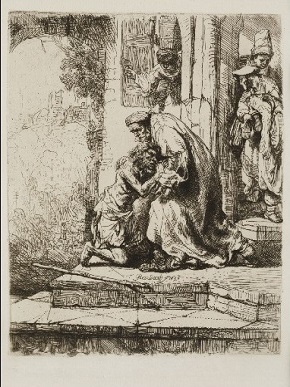
Rembrandt van Rijn
A master of chiaroscuro in etching
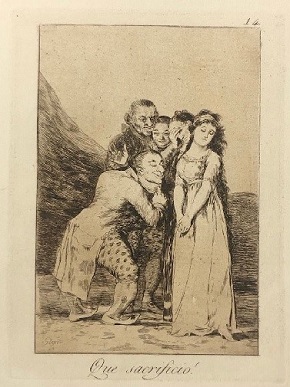
Francisco de Goya
The Caprichos and The Disasters of War
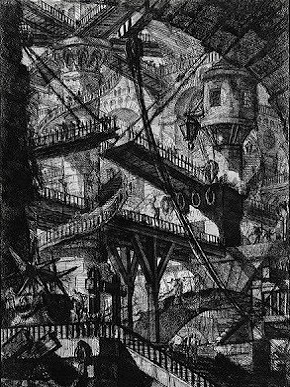
Giovanni Battista Piranesi
The Carceri (imaginary prisons)